
Signs of a bad AC capacitor in Texas

Send the request today and stop worrying about who to call.

Hand it off

A bad AC capacitor usually shows up as an outdoor unit that hums but won't start, or a fan that spins slow and struggles to get going. Sometimes the whole system clicks off and on without ever catching. The capacitor stores the charge that kicks the compressor and fan motor into motion, and once it weakens, that charge isn't strong enough to do the job. Texas summers push an AC to run for hours at a stretch, and that long runtime wears on a capacitor faster than it would somewhere milder. You might also notice the air isn't as cold as it should be, since the compressor is struggling rather than running clean. Left alone, a failing capacitor can take the compressor down with it, which turns a small part into a much bigger repair.

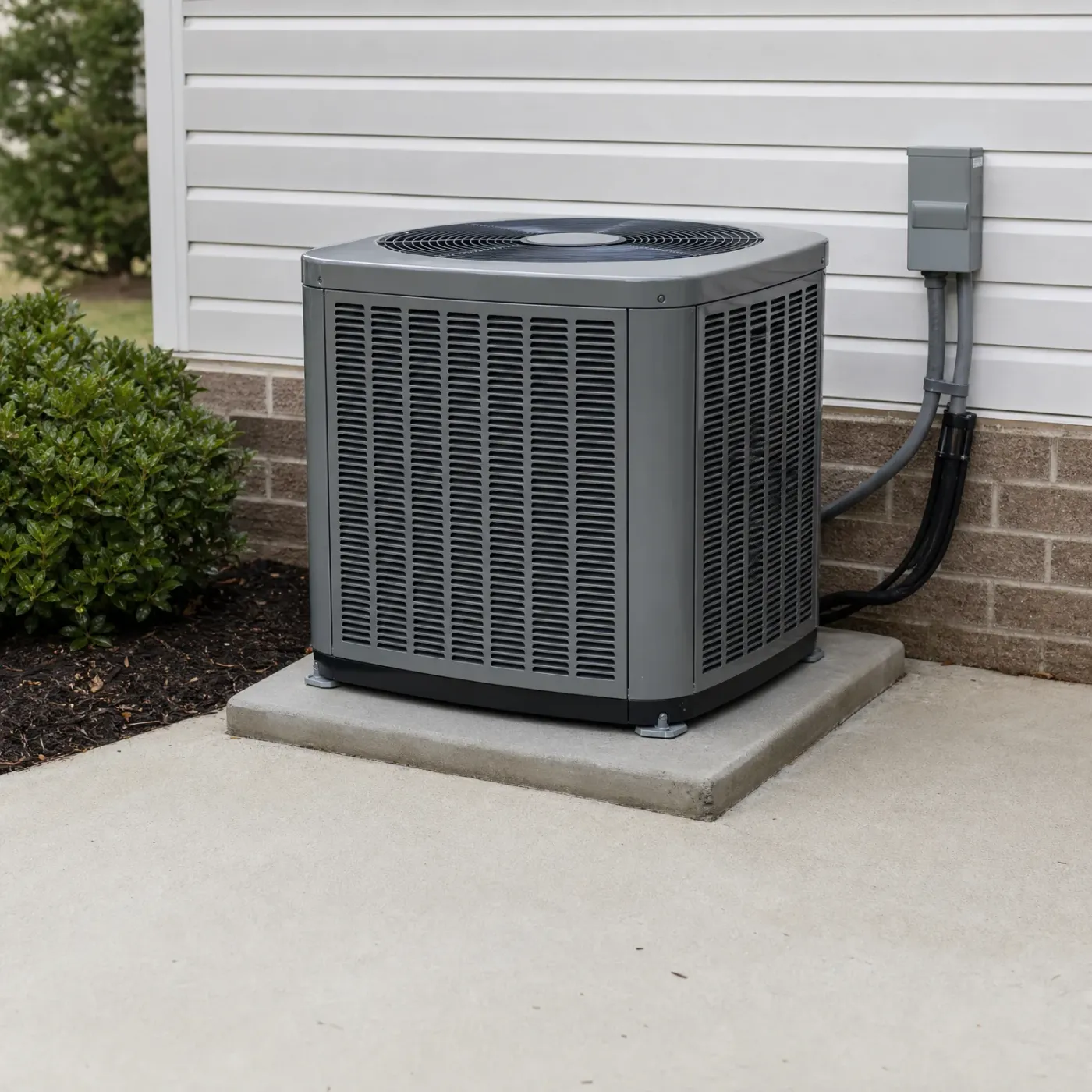
A gray outdoor air conditioner condenser unit on a concrete pad beside a house with white horizontal siding and a brick foundation, with a wall-mounted disconnect box and conduit, and a green shrub with mulch at left.

Capacitor still good

The fan kicks on right away and spins at full speed. The compressor catches on the first try, no hum, no hesitation. You get cold air moving through the house within a few minutes of the thermostat calling for it, and the unit cycles off clean when the temperature's met.
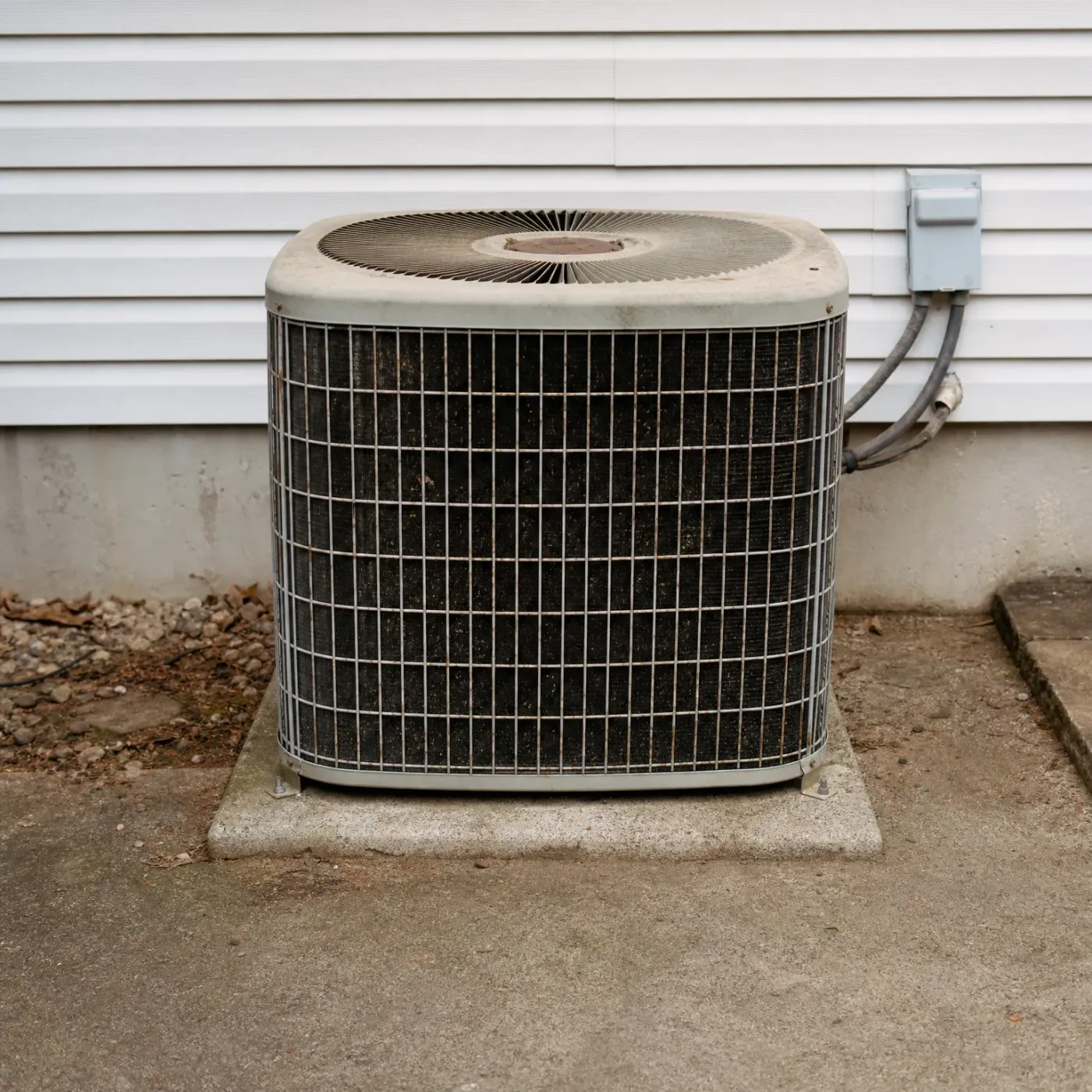

An outdoor air conditioning condenser unit on a concrete pad beside a house with white horizontal vinyl siding, with a gray electrical disconnect box and refrigerant lines on the wall behind it.

Capacitor on the way out

The fan turns slow or not at all, and you hear a hum coming from the unit while nothing moves. Dust and grime build up on the grille because the fan isn't pulling air through like it should. The system may click and try to start several times before it gives up, and the house stops cooling down.

Weak Capacitor vs. Failed Capacitor

Weak Capacitor

  • The outdoor fan spins slower than normal and takes a few extra seconds to reach full speed after the thermostat calls for cooling.
  • The compressor hums for a second or two before it catches, instead of starting clean.
  • The AC runs longer than it used to for the same drop in temperature, because the compressor isn't getting up to speed right away.
  • On the hottest afternoons the unit may shut off and restart on its own a few times before it holds a cycle.
  • A technician can read the capacitor with a meter and see the microfarad rating has drifted below what's printed on the case.
  • Catching this early means a swap of one part before the compressor has to work harder than it should.

Failed Capacitor

  • The outdoor unit hums steadily but the fan doesn't turn and the compressor never starts.
  • Flipping the breaker off and back on doesn't change anything, because the part that stores the charge is dead, not the power supply.
  • Indoor air stops moving cold within an hour or so, since the system inside is still calling for cooling the outdoor unit can't deliver.
  • In Texas summer heat, a house with no AC running climbs fast, and a day without it is enough to notice in every room.
  • A meter reading shows zero or close to it, confirming the capacitor is gone rather than weak.
  • Replacing it is a short job once a technician is on site, but the unit won't run at all until that happens.
A smiling man in a gray long-sleeved shirt stands in a kitchen looking to the side, with open shelves of dishes, a white mug on the counter, a potted plant, and a view through a doorway into a living room.
A smiling bearded man in a green sweater sits at a white marble kitchen island with a mug, potted plant and bowl of fruit, in a bright white interior with open shelving and an arched doorway.
A smiling man with dark curly hair and a beard, wearing a dark green knit sweater, stands at a white marble kitchen counter with a dark blue mug, with open shelving, pendant lights and a houseplant behind him.
A smiling man in a green ribbed sweater stands behind a wooden table holding a ceramic mug of coffee in a kitchen with white subway tile, shelves of potted plants, and a bowl of fruit.

Hand off the air conditioner problem

A weak capacitor does not get better on its own. Each time the compressor hums before it catches, it draws more amperage than it should, and that wear adds up on the hottest days, which in Texas is most of them. Left alone, the slow start turns into no start, usually on an afternoon when the house is already climbing past 80. At that point you are not just dealing with the capacitor, you are dealing with a houseful of people who want it fixed now. You could spend the afternoon calling around, explaining the humming and the slow fan to one company after another, waiting on callbacks, trying to line up quotes while the house keeps heating up. Sending this request instead means one contractor gets the details you have already worked out, the hum, the slow fan, the short cycling, and takes it from there. The part that was on your plate, finding someone and running the comparisons, is off it.

How a Capacitor Actually Fails

  • A run capacitor is a small cylinder wired to the outdoor unit that stores an electrical charge and releases it the instant the thermostat calls for cooling.
  • That charge gives the compressor and fan motor the jolt they need to start turning, then the capacitor keeps feeding them a steady charge while the unit runs.
  • Heat is what wears a capacitor down, and the outdoor unit sits in direct Texas sun pulling long hours most of the year.
  • Capacitors are rated in microfarads, and once the reading drops below that rating the motors cannot build enough torque to start clean.
  • A capacitor can test fine when the system is off and still fail once the unit warms up and the metal case expands.
  • The capacitor works alongside a start relay or contactor, so a bad start can also point to one of those parts instead.

The run capacitor sits inside the outdoor unit, usually a small can with two or three wire leads coming off the top. Its job is simple: hold a charge, then dump it into the compressor and fan motor the moment the thermostat calls for cooling. Without that initial jolt, neither motor has enough torque to start turning on its own. Once the system is running, the capacitor keeps sending a steady charge to the fan motor to keep it spinning at the right speed.

Heat is what breaks this part down over time. The outdoor unit sits outside in full Texas sun, and the capacitor inside it loses a little strength every summer it runs. That loss is measured in microfarads, the rating stamped on the side of the can. A new capacitor holds close to its rated number. As it ages, the reading drifts lower, and once it falls too far below spec, the motors it feeds can no longer build the torque to start cleanly.

This is also why a capacitor can test fine on a cool morning and still fail by afternoon. The reading looks acceptable when the metal case is cold, but heat makes the case expand and the connection inside shift, and that is often when the hum-and-no-start starts showing up. A contractor checking a no-start complaint will also check the start relay or contactor nearby, since either one can cause the same symptom and sit right next to the capacitor in the same unit.

Power costs 15.40 cents per kilowatt-hour statewide

At 15.40 cents per kilowatt-hour, a compressor that struggles to start costs you more every time it does. A weak capacitor makes the compressor pull extra amperage just trying to catch, and that extra draw shows up on your bill long before the unit quits outright.

EIA-861 2025 statewide residential average

A smiling man with dark curly hair in a navy t-shirt sits on a gray couch indoors, with a large-leafed plant and a window in the background.
A bearded man in a plaid flannel shirt stands in a kitchen looking out a window toward snow-covered shrubs, with a steaming mug on the windowsill and potted plants on a shelf behind him.
A closed silver laptop and a ceramic mug of dark coffee sit on a wooden table in front of two chair backs, with a kitchen counter, tiled backsplash, wooden cutting boards, a vase of greenery and a potted plant by a window behind.

A hum, a slow fan, a clicking unit: it's the capacitor

If your outdoor unit hums without starting, the fan spins slow, or the whole system clicks on and off without catching, the capacitor is the part to check first. It is a small, known failure, and it only gets worse from here. The sooner it is replaced, the less strain your compressor takes on in the process.

Finding a contractor on your own means searching, calling a few numbers, explaining the same hum and the same slow fan to each one, then sitting with quotes trying to work out who to trust. Send the form instead and that part is off your plate. A licensed contractor near you takes it from there, and you go back to waiting on cold air, not on hold.

Interior corner of a room with a window and sheer curtain at left, a gray upholstered sofa with a cushion at right, and a round wooden table holding stacked books and a round vase with an olive branch.
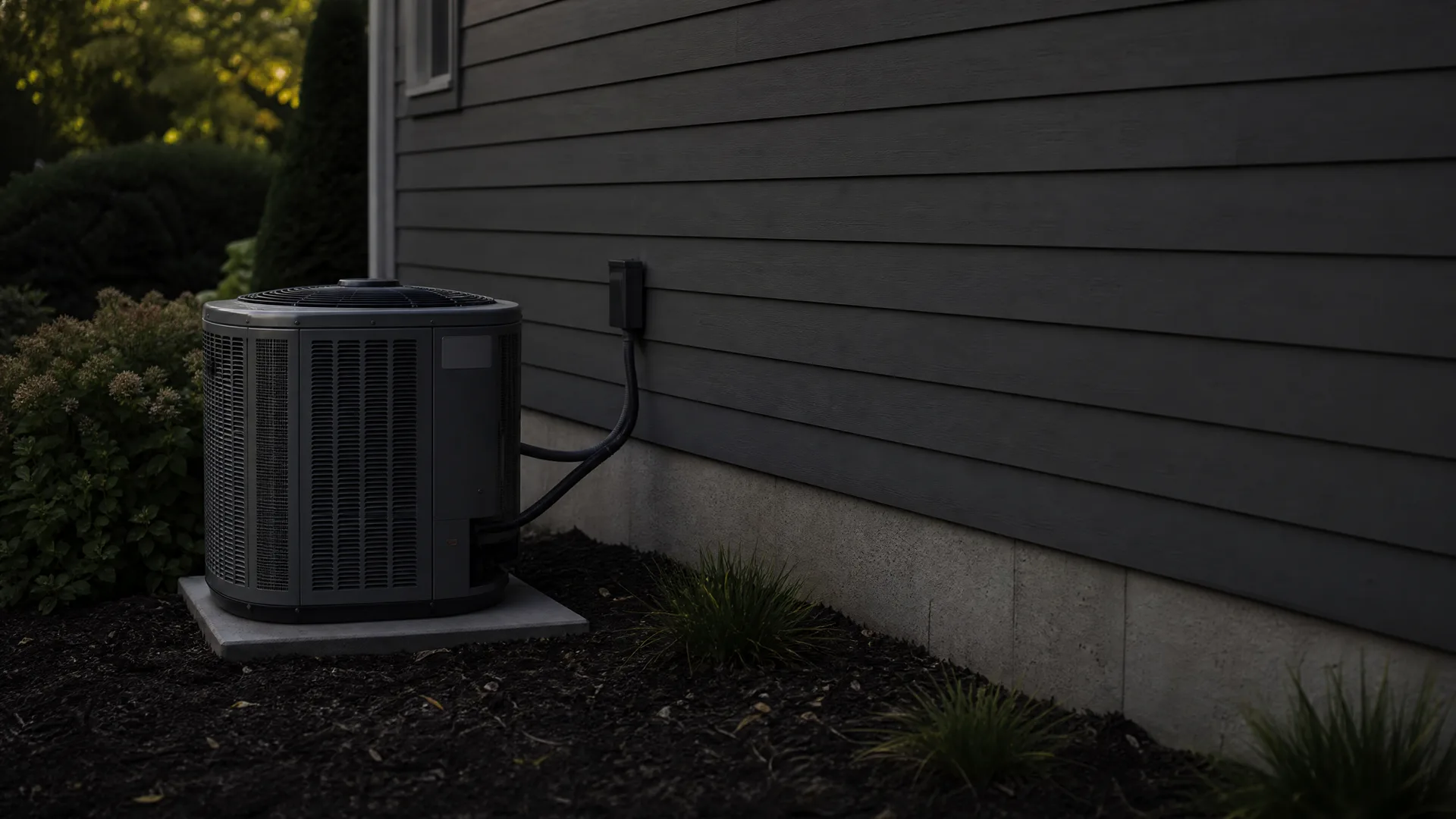
An outdoor air conditioner condenser unit on a concrete pad beside a dark horizontal-lap sided house, with mulch beds, shrubs and ornamental grasses nearby.

Send one request and you're done looking

Answer a few questions instead of calling shop after shop.

Step 1 of 3: Equipment