Tell us about the job
Takes about a minute. No obligation.
A Central AC system here has been running against real and repeated stress, and a contractor working a repair needs to account for that before settling on a cause. 229 severe weather events were recorded in Deaf Smith County, Texas between 2015 and 2024. At that rate, wear on high-load components like the compressor and condenser coils accumulates faster than a calendar inspection schedule alone would suggest. A contractor who skips the load history risks misreading a weather-driven failure as a manufacturing defect or a refrigerant problem, which sends the repair in the wrong direction and leaves the underlying wear unaddressed.
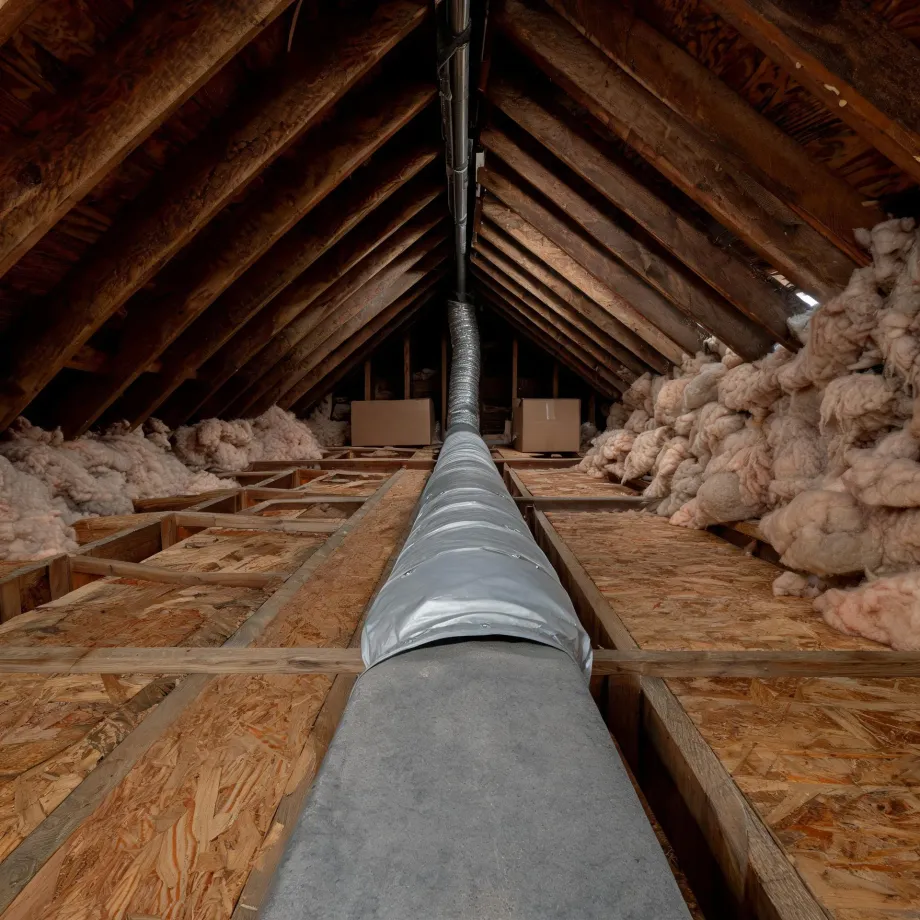
Half the homes in Deaf Smith County, Texas were built in 1971 or earlier (2020-2024 ACS 5-year). Much of the central AC equipment running in those houses was installed years or decades after the original build, which means a contractor opening a failed unit in this county may be working on a system from any of several distinct manufacturing eras. What that matters to is parts. A component that has been out of production for years takes longer to source and costs more when found, and that gap between availability and need is what shapes the repair bill here more than the labor itself.
The Parts of a Central AC a Contractor Checks First
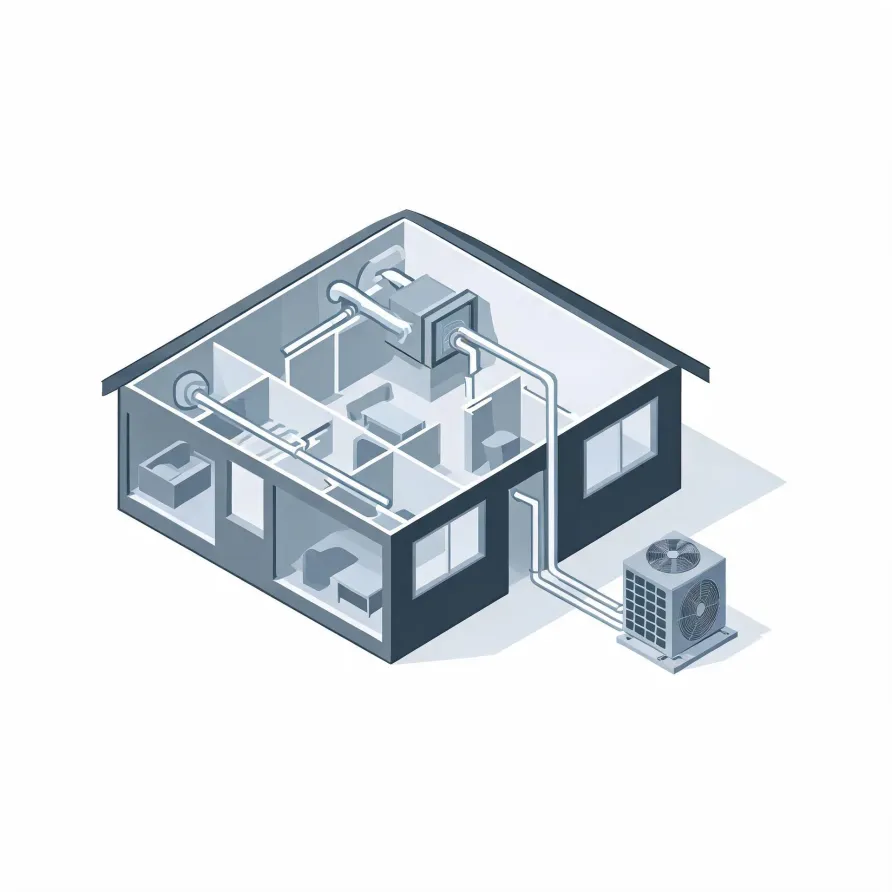
The outdoor condenser unit sits outside the house, usually on a concrete pad along a wall or at the side of the structure. It holds the compressor and condenser coil, and those two pieces are where a contractor starts when the system is blowing warm air or not running at all. The compressor is the part that pressurizes the refrigerant; the condenser coil is where heat leaves the system.
Inside the house, the air handler or furnace cabinet holds the evaporator coil and the blower. The evaporator coil pulls heat out of the indoor air, and the blower pushes that air through the house. A clogged coil, a weak blower motor, or a failing capacitor in either unit can each produce symptoms that look similar at first, which is why a contractor works through both sides before settling on a diagnosis.
The drawing shows a typical layout, and a licensed contractor determines which components and conditions apply to this particular house.
Get matched in Deaf Smith CountyDeaf Smith County, by the numbers
229 severe weather events were recorded in Deaf Smith County, Texas between 2015 and 2024.
NOAA National Centers for Environmental Information, Storm Events Database, bulk CSV export, events 2015-01-01 through 2024-12-31.Half the homes in Deaf Smith County, Texas were built in 1971 or earlier (2020-2024 ACS 5-year).
U.S. Census Bureau, 2020-2024 American Community Survey 5-Year EstimatesDeaf Smith County, Texas holds 6,984 housing units (2020-2024 ACS 5-year).
U.S. Census Bureau, 2020-2024 American Community Survey 5-Year EstimatesOwners occupy 66.8% of the occupied homes in Deaf Smith County, Texas (2020-2024 ACS 5-year).
U.S. Census Bureau, 2020-2024 American Community Survey 5-Year EstimatesRules & Standards Behind AC Repair in Deaf Smith County, Texas9 sourced rules and standards
What HVAC Repair Looks Like in Deaf Smith County
Split-system central air conditioners rated below 45,000 Btu/h manufactured on or after January 1, 2023 must meet a federal minimum of 13.4 SEER2.
Split-system central air conditioners rated at or above 45,000 Btu/h manufactured on or after January 1, 2023 must meet a federal minimum of 13.4 SEER2.
Split-system central air conditioners manufactured between January 1, 2015 and December 31, 2022 had to meet 13 SEER, the metric that preceded SEER2.
Single-package central air conditioners manufactured on or after January 1, 2023 must meet a federal minimum of 13.4 SEER2.
Space-constrained central air conditioners manufactured on or after January 1, 2023 must meet a federal minimum of 11.7 SEER2.
Federal efficiency standards for split-system central air conditioners and heat pumps are set on each certified combination of outdoor unit and indoor coil rather than on the outdoor unit alone.
Residential and light commercial air conditioning and heat pump systems assembled in the field, including mini-splits and unitary systems, may not be installed on or after January 1, 2025 using a refrigerant with a global warming potential above 700.
A field-assembled system whose specified components were all manufactured or imported before January 1, 2025 carries no installation compliance date under the refrigerant restrictions and may still be installed.
Licensing and Legal Requirements in Deaf Smith County, Texas
In Texas a person may not engage in air conditioning and refrigeration contracting unless that person holds a license issued under the state air conditioning and refrigeration contractor law.
Severe Weather Events in Deaf Smith County
Extreme weather puts mechanical stress on cooling equipment, and that stress accumulates over time. How often conditions here push a system hard is a local fact, which is why repair demand in Deaf Smith County is shaped by what the weather actually does.
229 severe weather events, 2015–2024. Source: NOAA National Centers for Environmental Information, Storm Events Database.