Tell us about the job
Takes about a minute. No obligation.
A contractor quoting a central AC repair in Shelby County works out pretty quickly whether the weather or the equipment itself is the real story. 84 severe weather events were recorded in Shelby County, Texas between 2015 and 2024. At that rate, severe weather is an event here, not a backdrop every system is quietly running against year-round. A compressor that quit this summer almost certainly quit because of age or deferred service, and a contractor who prices the repair without checking the maintenance record is skipping the part of the diagnosis that actually determines what failed and what comes next.
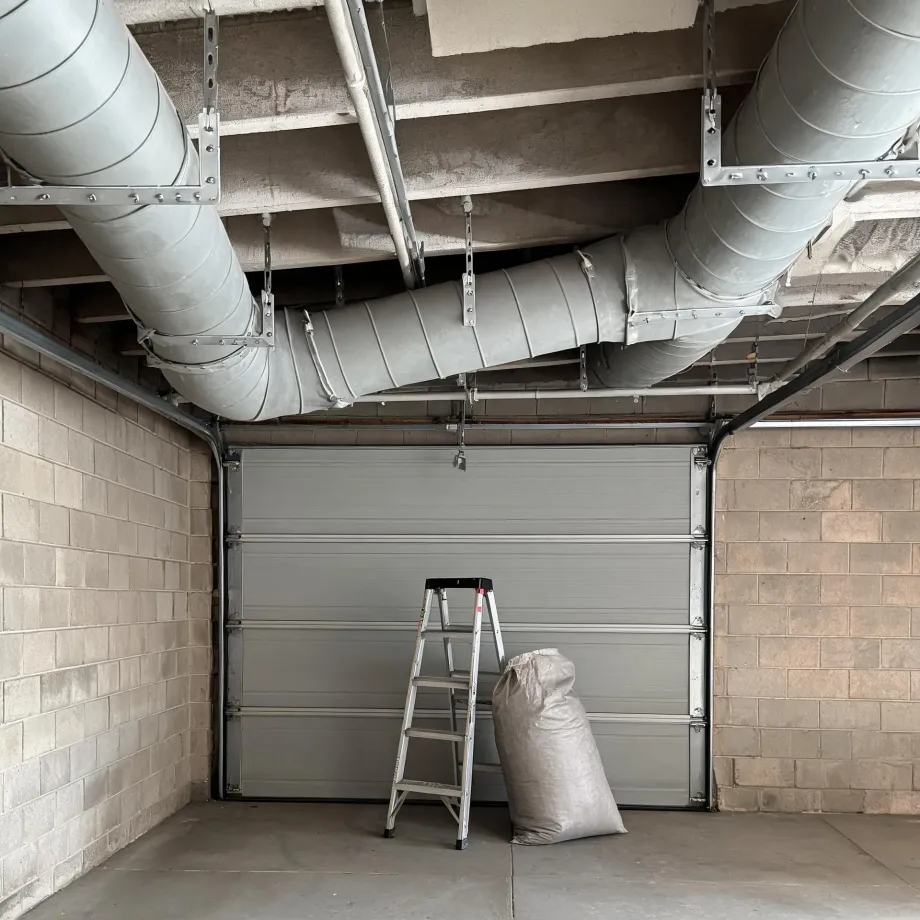
Older ductwork and wiring are a known quantity. What a contractor cannot predict before opening the equipment is whether the parts a system running in stock this age actually requires are still being manufactured. Half the homes in Shelby County, Texas were built in 1984 or earlier (2020-2024 ACS 5-year). When a compressor or control board in a unit that old fails, the repair scope depends on what the parts market looks like for that specific model, and that answer is not in the age of the house.
The Parts of a Central AC a Contractor Checks First
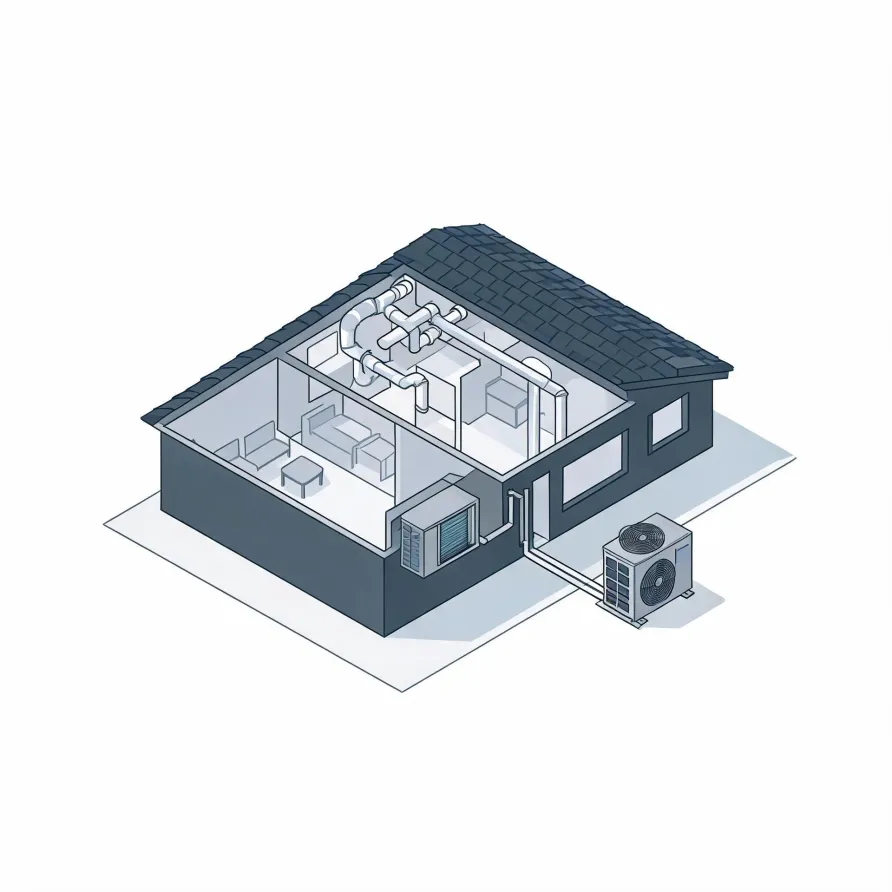
The outdoor condenser unit sits outside the house, usually on a concrete pad along a side or rear wall, and it carries the compressor and condenser coil. These are the pieces a contractor reaches first when the system stops cooling, because a failed compressor or a fouled coil will shut down the whole system. The air handler or furnace cabinet lives inside, in a closet, attic, or utility room, and it holds the evaporator coil and the blower.
The evaporator coil, which sits directly above or inside the air handler, is a common source of trouble when ice forms on the system or airflow drops off. The expansion valve and refrigerant lines connect the two cabinets and carry the refrigerant between them. A contractor also checks the condensate drain, a small line that pulls moisture out of the air handler, because a clogged drain can trip a safety switch and stop the system cold.
The drawing shows a typical layout, and a licensed contractor determines exactly which components apply to this house and its setup.
Get matched in Shelby CountyShelby County, by the numbers
84 severe weather events were recorded in Shelby County, Texas between 2015 and 2024.
NOAA National Centers for Environmental Information, Storm Events Database, bulk CSV export, events 2015-01-01 through 2024-12-31.Half the homes in Shelby County, Texas were built in 1984 or earlier (2020-2024 ACS 5-year).
U.S. Census Bureau, 2020-2024 American Community Survey 5-Year EstimatesShelby County, Texas holds 11,584 housing units (2020-2024 ACS 5-year).
U.S. Census Bureau, 2020-2024 American Community Survey 5-Year EstimatesOwners occupy 74.0% of the occupied homes in Shelby County, Texas (2020-2024 ACS 5-year).
U.S. Census Bureau, 2020-2024 American Community Survey 5-Year EstimatesRules & Standards Governing Central AC Repair in Shelby County, Texas9 sourced rules and standards
What the repair visit actually looks like
Split-system central air conditioners rated below 45,000 Btu/h manufactured on or after January 1, 2023 must meet a federal minimum of 13.4 SEER2.
Split-system central air conditioners rated at or above 45,000 Btu/h manufactured on or after January 1, 2023 must meet a federal minimum of 13.4 SEER2.
Split-system central air conditioners manufactured between January 1, 2015 and December 31, 2022 had to meet 13 SEER, the metric that preceded SEER2.
Single-package central air conditioners manufactured on or after January 1, 2023 must meet a federal minimum of 13.4 SEER2.
Space-constrained central air conditioners manufactured on or after January 1, 2023 must meet a federal minimum of 11.7 SEER2.
Federal efficiency standards for split-system central air conditioners and heat pumps are set on each certified combination of outdoor unit and indoor coil rather than on the outdoor unit alone.
Residential and light commercial air conditioning and heat pump systems assembled in the field, including mini-splits and unitary systems, may not be installed on or after January 1, 2025 using a refrigerant with a global warming potential above 700.
A field-assembled system whose specified components were all manufactured or imported before January 1, 2025 carries no installation compliance date under the refrigerant restrictions and may still be installed.
What Shelby County, Texas Requires for HVAC Repair Work
In Texas a person may not engage in air conditioning and refrigeration contracting unless that person holds a license issued under the state air conditioning and refrigeration contractor law.
Severe Weather Events in Shelby County
Extreme weather puts real stress on central AC systems, driving up repair demand and shortening equipment life. How hard local weather pushes that equipment is a Shelby County question, and it shapes what repair work looks like here.
84 severe weather events, 2015–2024. Source: NOAA National Centers for Environmental Information, Storm Events Database.