Tell us about the job
Takes about a minute. No obligation.
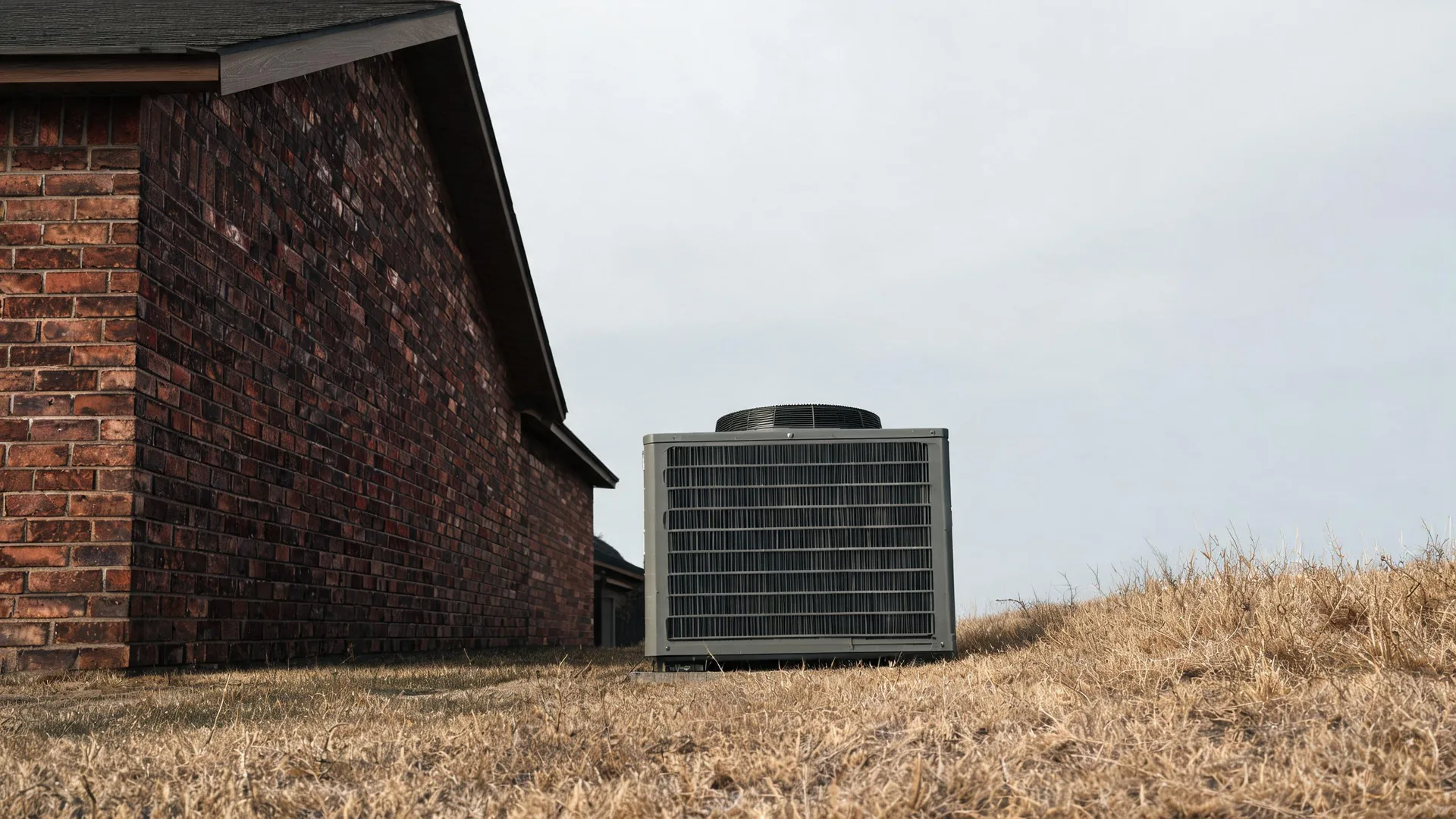
A contractor quoting a central AC install in Fort Bend County has to get the sizing right for a climate that runs the equipment hard through long cooling seasons, but severe weather is not the variable that drives that decision. 91 severe weather events were recorded in Fort Bend County, Texas between 2015 and 2024. At roughly the midpoint of counties nationwide, that record puts Fort Bend in territory where storms are real but not the primary load shaping how a system performs over its life. Heat and humidity are. A contractor who quotes this install around storm exposure is solving for the wrong pressure; what the unit will face, year after year, is sustained demand from a brutal summer, and the quality of the installation determines how well it holds up against that.
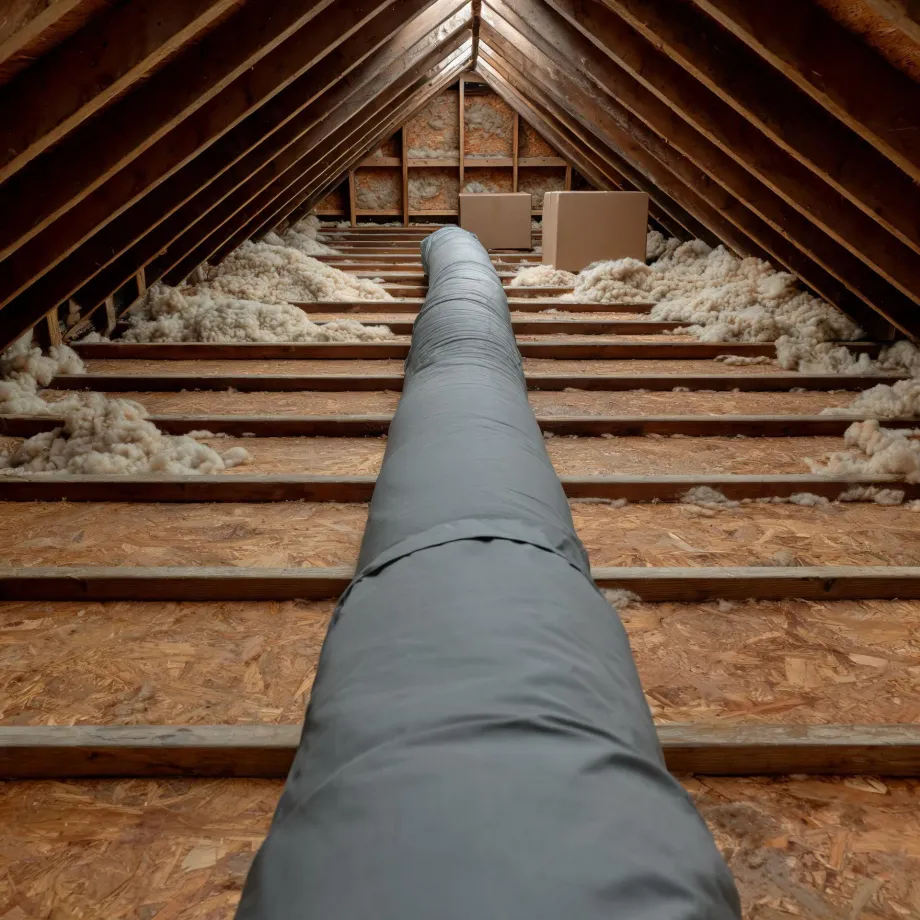
Ductwork and electrical panels put in during a house's original construction were designed around the equipment of that era, and when that era is not far back, a new system lands in infrastructure that was built for something compatible. Half the homes in Fort Bend County, Texas were built in 2005 or earlier (2020-2024 ACS 5-year). That recency changes what a contractor has to resolve before an installation can proceed. In stock built within the last couple of decades, the ductwork capacity and the electrical service are far less likely to need correction than the equipment selection itself, so the job turns on matching the right unit to the load the house puts on it.
What a Central AC System Includes
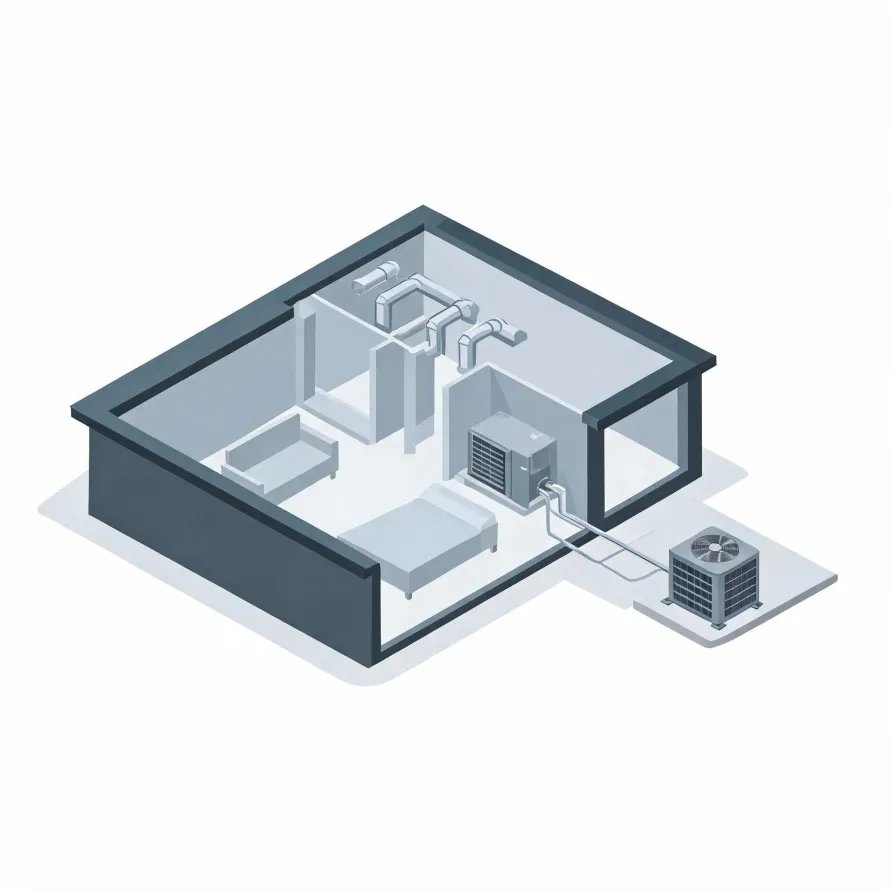
The outdoor condenser unit sits outside the house, usually on a concrete pad beside the foundation, and houses the compressor and condenser coil. The indoor air handler or furnace sits inside, most often in a closet, attic, or utility room, and holds the evaporator coil that does the work of pulling heat out of the air inside.
The thermostat mounts on an interior wall and is the control point the homeowner touches directly. A copper refrigerant line set runs between the outdoor and indoor units, carrying refrigerant back and forth, and a condensate drain line carries moisture pulled from the air to a floor drain or outside.
The drawing beside this text shows the general layout of these components, and a licensed contractor will determine exactly how each one applies to your house.
Get matched in Fort Bend CountyFort Bend County, by the numbers
91 severe weather events were recorded in Fort Bend County, Texas between 2015 and 2024.
NOAA National Centers for Environmental Information, Storm Events Database, bulk CSV export, events 2015-01-01 through 2024-12-31.Half the homes in Fort Bend County, Texas were built in 2005 or earlier (2020-2024 ACS 5-year).
U.S. Census Bureau, 2020-2024 American Community Survey 5-Year EstimatesFort Bend County, Texas holds 305,633 housing units (2020-2024 ACS 5-year).
U.S. Census Bureau, 2020-2024 American Community Survey 5-Year EstimatesOwners occupy 77.0% of the occupied homes in Fort Bend County, Texas (2020-2024 ACS 5-year).
U.S. Census Bureau, 2020-2024 American Community Survey 5-Year EstimatesCodes & Standards for Central AC Installation in Fort Bend County, Texas9 sourced rules and standards
What the installation actually looks like
Split-system central air conditioners rated below 45,000 Btu/h manufactured on or after January 1, 2023 must meet a federal minimum of 13.4 SEER2.
Split-system central air conditioners rated at or above 45,000 Btu/h manufactured on or after January 1, 2023 must meet a federal minimum of 13.4 SEER2.
Split-system central air conditioners manufactured between January 1, 2015 and December 31, 2022 had to meet 13 SEER, the metric that preceded SEER2.
Single-package central air conditioners manufactured on or after January 1, 2023 must meet a federal minimum of 13.4 SEER2.
Space-constrained central air conditioners manufactured on or after January 1, 2023 must meet a federal minimum of 11.7 SEER2.
Federal efficiency standards for split-system central air conditioners and heat pumps are set on each certified combination of outdoor unit and indoor coil rather than on the outdoor unit alone.
Residential and light commercial air conditioning and heat pump systems assembled in the field, including mini-splits and unitary systems, may not be installed on or after January 1, 2025 using a refrigerant with a global warming potential above 700.
A field-assembled system whose specified components were all manufactured or imported before January 1, 2025 carries no installation compliance date under the refrigerant restrictions and may still be installed.
What Fort Bend County, Texas Requires for HVAC Installation
In Texas a person may not engage in air conditioning and refrigeration contracting unless that person holds a license issued under the state air conditioning and refrigeration contractor law.
Severe Weather Events in Fort Bend County
Fort Bend County weather puts real stress on cooling equipment over time. How hard a system has to work, and how long it holds up, is shaped by what the local climate actually does.
91 severe weather events, 2015–2024. Source: NOAA National Centers for Environmental Information, Storm Events Database.